Zeus
Site Orchestrator.
An autonomous per-site control plane that provisions and operates fleets of private AI co-worker agents on infrastructure the customer owns. No central master, no cloud relay — audit logs never leave the site.
The Live Console
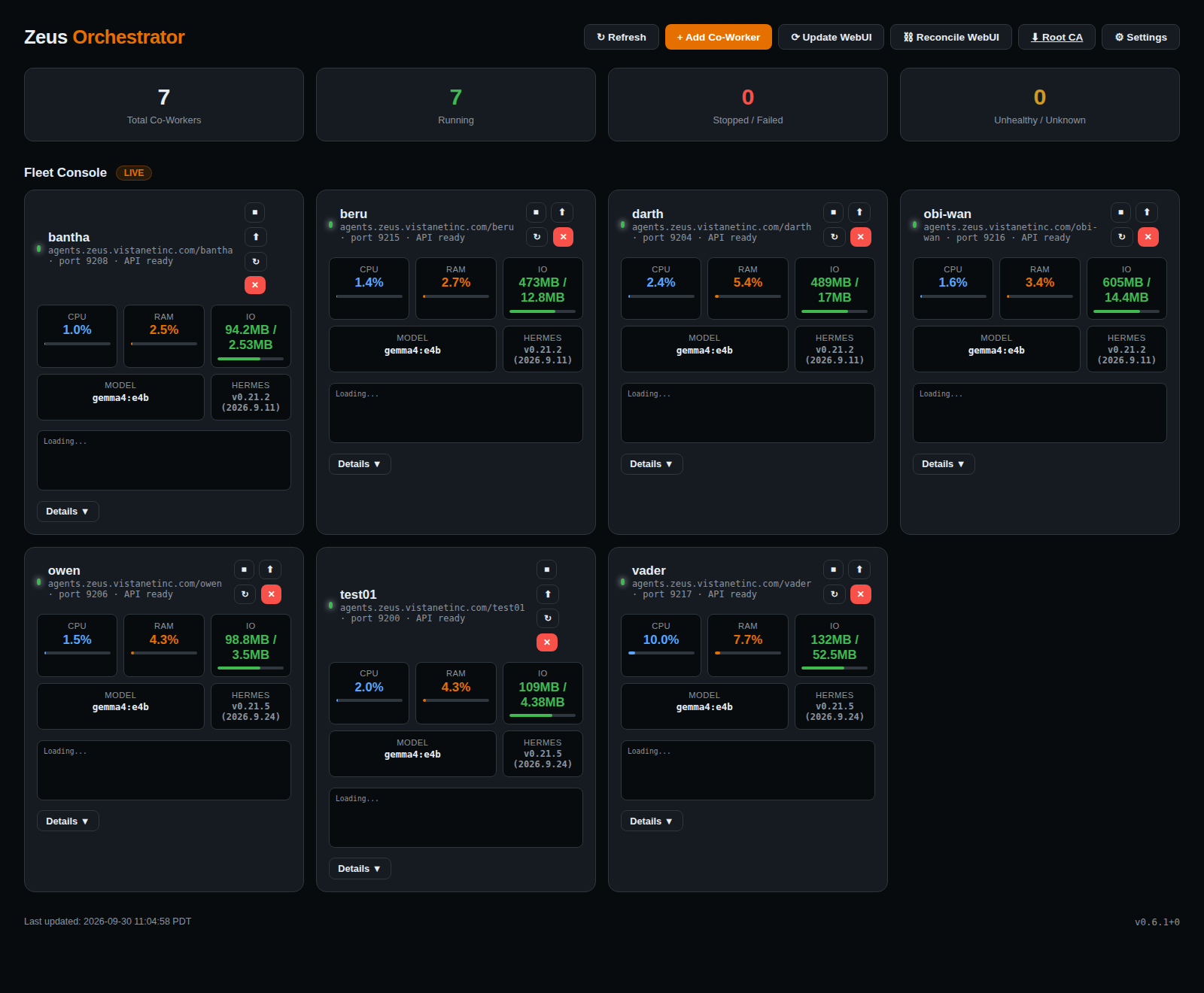
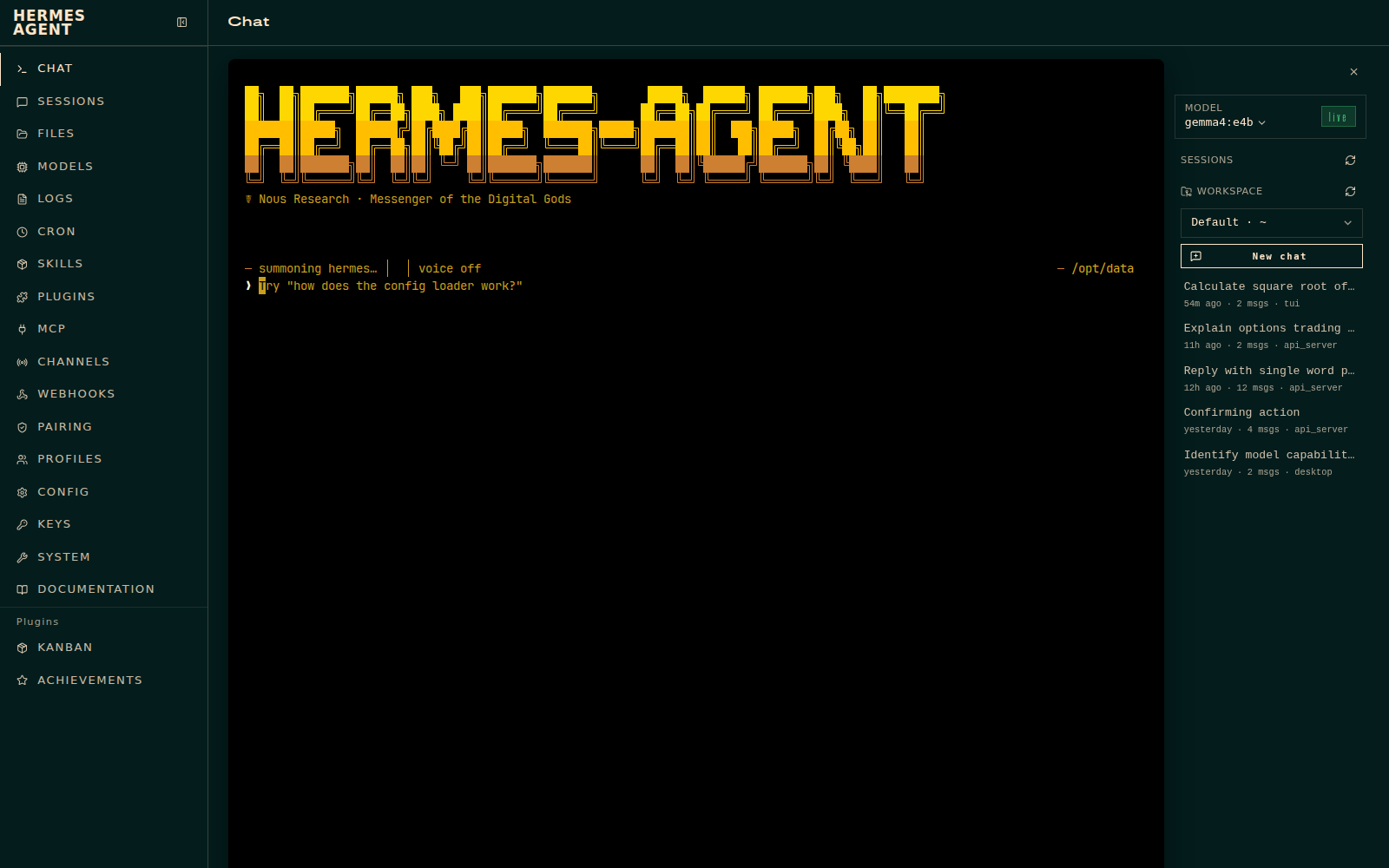
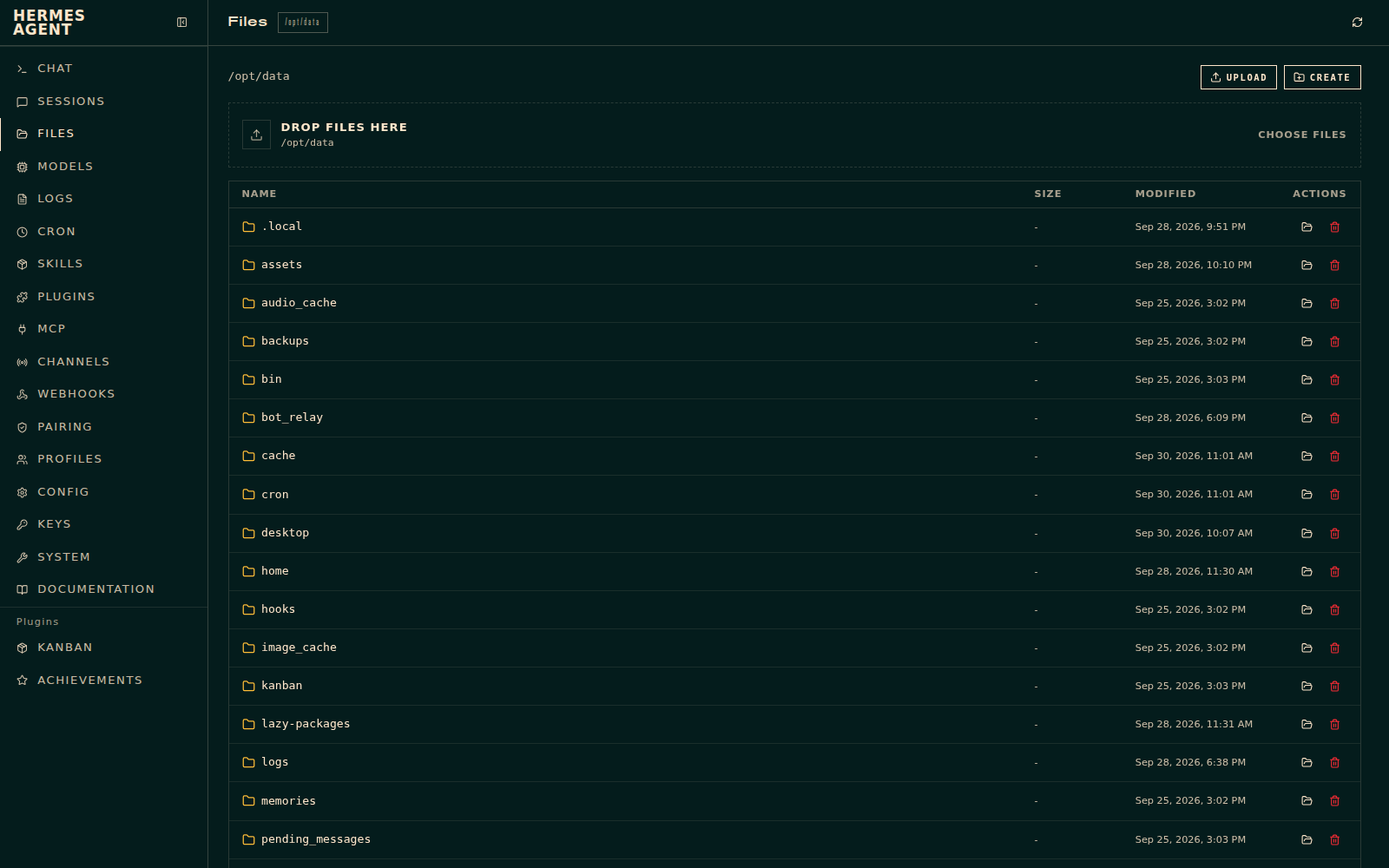
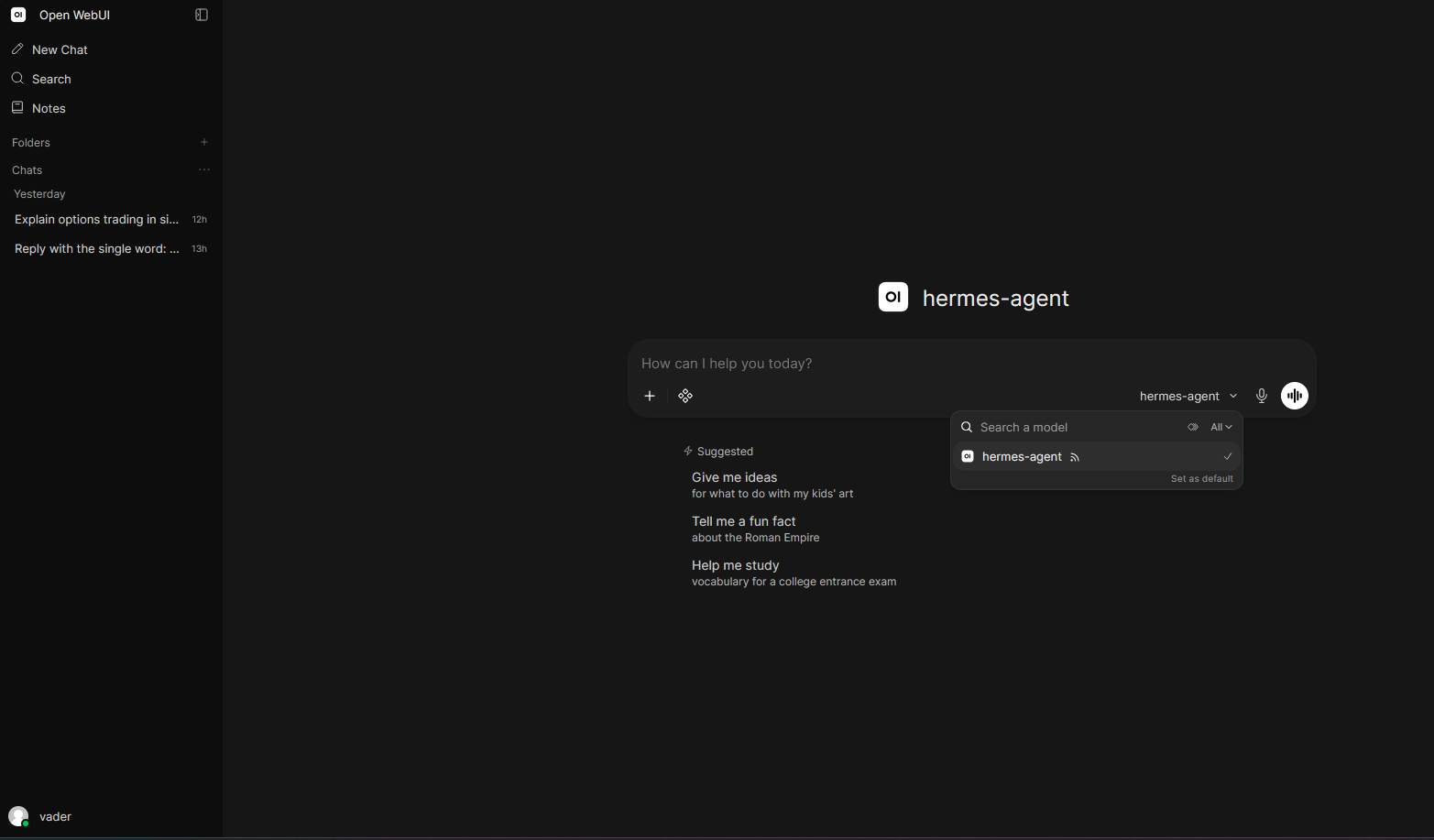
Direct captures from the production instance in the TallerHawk lab — the orchestrator panel and the per-worker dashboards it provisions, taken live with a full fleet running.
How It Works Now
What Zeus does today — as validated against the live instance during the 2026-09-30 full-lifecycle test (provision → endpoint sweep → upstream flips → stop/start/restart/exec/logs → destroy, all green).
One-Click Co-Workers
Add a co-worker from the panel and Zeus does the rest: renders the container compose, boots the Hermes agent in its data volume, seeds its config, mints per-worker credentials, and wires every route. Provisioning completes in under two minutes with all three endpoints live.
Three Routes Per Worker
Every co-worker comes up with an OpenAI-compatible API for direct chat integrations, a private web dashboard (chat, files, models, logs, cron, skills, MCP) on its own subdomain, and a writable terminal console — all served over one TLS edge with per-worker authentication.
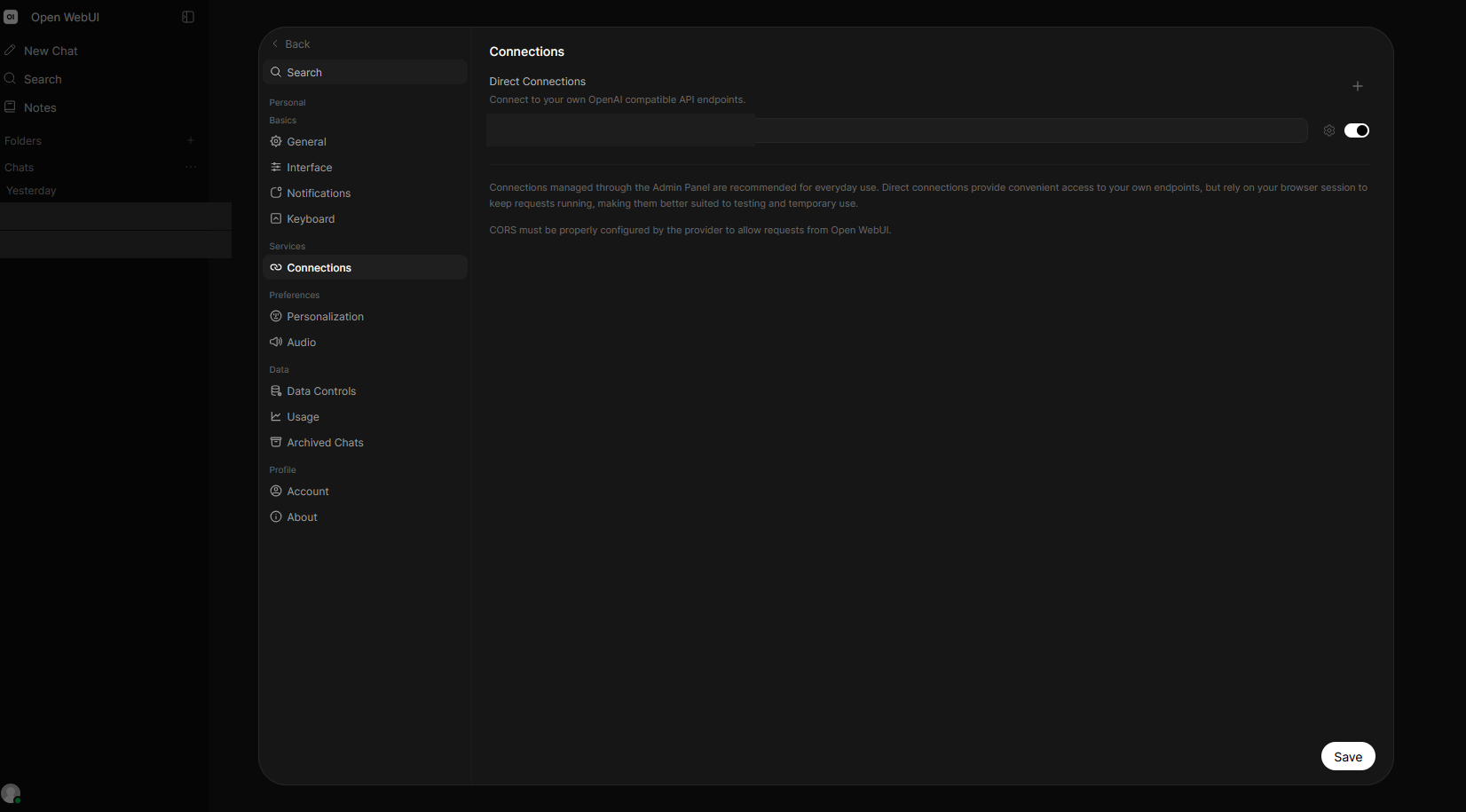
Browser-Side Direct Connections
The site runs one shared Open WebUI (currently v0.11.4) as the common chat front end, and Zeus binds each co-worker to it privately: the browser fetches that worker's OpenAI-compatible model list directly through the edge proxy and chats straight with its gateway — worker isolation stays intact in a shared interface, and prompts never cross tenants. A reconcile action re-verifies state, keys and live connections in one pass.
Fleet Console
Live CPU, RAM and I/O per container; per-worker model and Hermes version tiles that make fleet version drift visible at a glance; streaming logs; start/stop/restart and exec; upstream re-targeting (WebUI / API / console) that flips atomically with state and routes. Credentials live in a masked Access pane — per-worker, revocable.
Clean Deprovision
Destroy removes all four surfaces in order: the co-worker's data directory (root-archived to a verifiable tar before deletion), its containers, its edge routes (validated against the live proxy config, not just files), and its WebUI account — so a departed worker leaves no residue.
Self-Updating Site
Sites are re-run-safe: one installer pass re-verifies prerequisites, fast-forwards the code, rebuilds with the current version stamp and reports. Agent images self-update digest-pinned with a health gate that rolls back a bad pull automatically — the panel shows exactly what version is running.
The stack is deliberately site-local: co-worker hostnames resolve only inside the customer LAN, certificates come from a private authority whose root never leaves the customer trust stores, and nothing about the fleet is visible from the internet.
Roadmap
Where Zeus goes next. Tracked openly in the project's git board — each item below is a real ticket or a documented pipeline step, not a wish list.
- Co-worker interconnection — let fleet agents talk to each other, with an orchestrator-level policy layer deciding who may call whom.
- Orchestrator self-management — promote the Hermes instance that runs the panel into a first-class co-worker that can operate the stack.
- Agent config editing from the panel — per-worker settings with a template popup, so model and behavior changes don't require shell access.
- Global model-provider settings — site-wide default for cloud inference, overridable per co-worker.
- Identity & access — admin as the initial named user, password change from the panel, no shared test identities in production.
- State reconciliation — self-healing for crashed provisions and records whose containers outlived their state files.
- Container registry delivery — push releases to the site's own registry so customer sites update by tag instead of by git pull.
- Air-gap support — pre-seeded console binaries and offline verification for sites with no outbound internet.
Design specification and source live in the project's own git instance; the lab instance is treated as the soak environment before anything ships to a customer site.
"Your people. Your models. Your metal."
Zeus turns a validated architecture into a product the customer runs themselves: private AI teammates, provisioned in minutes, operated from one panel, on infrastructure nobody else can see into.